
Constructive anatomy is a comprehensive system for understanding the human form through structured analysis, enabling artists to accurately depict proportion, movement, and detail in their work.
Definition and Importance
Constructive anatomy is a systematic approach to understanding the human form through its underlying structure, enabling artists to create accurate and expressive depictions. It serves as the foundation for mastering figure drawing, sculpture, and other artistic disciplines. By breaking down the body into its core components—such as bones, muscles, and proportions—artists can better capture movement, gesture, and form. This method emphasizes the importance of anatomy as a tool for creativity, not just technical detail. Resources like Constructive Anatomy PDFs by George Bridgman and Andrew Loomis provide invaluable guidance, making anatomical study accessible and practical for artists. Mastery of constructive anatomy enhances both realism and artistic interpretation, bridging the gap between detailed study and expressive artistry.
Historical Context and Evolution
Constructive anatomy emerged as a foundational method for artists to understand and depict the human form accurately. Rooted in Renaissance art, it draws from anatomical studies by masters like Leonardo da Vinci, who detailed the body’s structure. In the 20th century, artists like George Bridgman and Andrew Loomis revolutionized the field by creating systematic approaches to anatomy, emphasizing proportion, movement, and form. Their works, such as Bridgman’s Constructive Anatomy and Loomis’s Drawing the Head and Hands, became seminal resources. These teachings evolved to accommodate modern artistic needs, blending traditional techniques with contemporary applications in digital art and animation. Their contributions remain indispensable, providing a bridge between classical knowledge and innovative practices.
Key Figures in Constructive Anatomy
George Bridgman and Andrew Loomis are pivotal figures, renowned for their detailed anatomical studies. Bridgman’s Constructive Anatomy and Loomis’s Drawing the Head and Hands remain essential resources for artists.
George Bridgman and His Contributions
George Bridgman, a celebrated artist and educator, revolutionized the study of anatomy through his seminal work, Constructive Anatomy. His approach emphasized understanding the human form as a series of interconnected structures, enabling artists to draw accurately from imagination. Bridgman’s teachings focused on proportion, balance, and the underlying framework of the body, providing a foundation for dynamic figure drawing. His methods, detailed in his widely acclaimed book, have become indispensable for artists seeking to master anatomical accuracy. Bridgman’s legacy lies in his ability to simplify complex forms, making anatomy accessible while maintaining artistic integrity. His work remains a cornerstone in artistic education, inspiring generations to refine their craft.
Andrew Loomis and His Approach

Andrew Loomis, a renowned artist and educator, brought a unique perspective to constructive anatomy, blending technical precision with artistic expression. His work, as seen in Drawing The Head and Hands, emphasizes the importance of understanding anatomy as a foundation for creating lifelike and expressive forms. Loomis’s approach focuses on the interplay of structure, proportion, and gesture, encouraging artists to see the body as a harmonious whole rather than isolated parts. His teachings stress the value of anatomy as a tool for artistic creation, not merely a scientific study. By simplifying complex forms and emphasizing rhythm and balance, Loomis’s methods have empowered artists to achieve both accuracy and elegance in their work, making his contributions timeless and invaluable.
Core Principles of Constructive Anatomy
Constructive anatomy focuses on understanding the human form through line, value, and structure, enabling artists to create balanced, realistic depictions by breaking down complex forms into manageable elements.
The Role of Line and Value in Anatomy
In constructive anatomy, line and value are fundamental tools for capturing form and structure. Lines define shape, movement, and edges, while value (light and dark) creates depth and dimension. Artists use these elements to simplify complex anatomical forms, ensuring accuracy and balance. Value helps differentiate between convex and concave surfaces, while lines guide the viewer’s eye through the composition. Understanding how to apply line and value effectively is crucial for creating realistic and dynamic depictions of the human body. These principles, emphasized in resources like George Bridgman’s Constructive Anatomy and Andrew Loomis’s Drawing the Head and Hands, form the foundation of artistic anatomy studies.
Understanding Form and Structure
Understanding form and structure is essential in constructive anatomy, as it allows artists to break down the human body into manageable, interconnected components. Form refers to the three-dimensional shape of anatomical elements, while structure emphasizes their organization and relationship. By analyzing these aspects, artists can simplify complex shapes into basic forms like spheres, cylinders, and planes. This approach, highlighted in resources like Andrew Loomis‘s and George Bridgman‘s works, helps in creating accurate and balanced depictions. Structure provides a framework for understanding how muscles, bones, and tissues function together, enabling artists to capture movement and proportion effectively. This foundation is crucial for both realistic and interpretive artistic representations of the human body.
The Human Skeleton in Constructive Anatomy
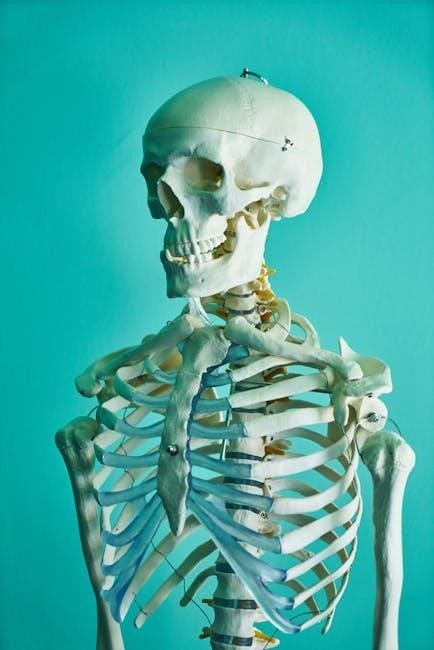
The human skeleton serves as the structural foundation, providing a framework for understanding proportion, movement, and balance in artistic depictions of the body.
The Axial and Appendicular Skeleton
The axial skeleton forms the body’s central framework, including the skull, spine, ribs, and sternum, while the appendicular skeleton comprises the limbs and pelvis. Together, they create a balanced structure essential for movement and posture. The axial skeleton provides stability, protecting vital organs like the brain and heart, while the appendicular skeleton enables locomotion and interaction with the environment. Understanding their interconnection is crucial for accurately depicting the human form in art. This foundational knowledge helps artists capture the body’s proportions and mechanics, ensuring realistic and dynamic representations. The skeleton’s structure is a cornerstone of constructive anatomy, guiding the placement of muscles and tissues.

The Skull and Its Structural Significance
The skull serves as the foundation of the head, housing the brain and facial structures. Its complex anatomy includes the cranial bones, which form the braincase, and the facial bones, which shape the features. Understanding the skull’s structure is vital for accurately depicting the head in art. The cranial bones fuse during development, creating a rigid protective casing, while the facial bones form the framework for eyes, nose, and jaw. The skull’s proportions and angles influence facial expressions and overall appearance. Artists often study the skull to master facial anatomy, ensuring realistic portrayals. Resources like George Bridgman’s Constructive Anatomy and Andrew Loomis’s works provide detailed insights, making it easier to grasp the skull’s intricate design and its role in artistic representation.
Muscle Structure and Movement
Muscle structure and movement are essential for understanding human anatomy, enabling artists to depict dynamic poses and realistic motion accurately in their work.

Major Muscle Groups and Their Functions
The human body is composed of several major muscle groups, each serving specific functions essential for movement and posture. The deltoids, pectoralis, and latissimus dorsi are key muscles in the upper body, responsible for shoulder and arm movements. The abdominal muscles, including the rectus abdominis and obliques, stabilize the core and facilitate bending and twisting. In the lower body, the quadriceps, hamstrings, and glutes work together to enable walking, running, and maintaining balance. Understanding these muscle groups and their interactions is crucial for accurately depicting the human form in art, allowing artists to capture realistic poses and dynamic movements effectively.
Understanding Movement and Gesture
Understanding movement and gesture is fundamental to capturing the dynamic nature of the human form. Gesture drawing focuses on the rhythmic flow of the body, emphasizing action and energy. By studying how muscles interact during motion, artists can depict realistic movement. The relationship between anatomy and gesture is crucial, as it allows for the accurate representation of poses and emotions. Andrew Loomis and George Bridgman, renowned artists, emphasized the importance of gesture in their teachings. Their works highlight how gesture studies can transform static poses into vibrant, lifelike expressions. This approach enables artists to convey the essence of movement, making their work more engaging and dynamic.
The Role of Proportion and Measurement

Proportion and measurement are foundational in constructive anatomy, ensuring accurate and balanced depictions of the human form. They guide artists in creating realistic and aesthetically pleasing art, as detailed in resources like George Bridgman’s and Andrew Loomis’ works.
Proportional Analysis in Anatomy
Proportional analysis in anatomy involves understanding the relationships between body parts to create accurate and balanced depictions. It focuses on measuring and comparing lengths, widths, and depths to ensure harmony in the human form. This method, emphasized in resources like George Bridgman’s Constructive Anatomy and Andrew Loomis’s Drawing the Head and Hands, helps artists capture the structure and symmetry of the body. By breaking down the figure into measurable segments, such as the eight-head proportion system, artists can achieve consistency and realism. Proportional analysis is essential for figure drawing, sculpture, and digital art, as it provides a foundation for accurate representation and aesthetic appeal. It also aids in identifying and correcting anatomical inaccuracies, making it a cornerstone of constructive anatomy studies.
Measuring Techniques for Accuracy
Measuring techniques are fundamental to achieving precision in constructive anatomy. Artists use methods like proportional comparison, where body parts are measured relative to a fixed unit, such as the length of the skull or the width of the shoulder. Tools like calipers or grid paper can aid in capturing accurate dimensions. George Bridgman and Andrew Loomis emphasize consistent measurement in their works, such as Constructive Anatomy and Drawing the Head and Hands. By breaking the body into measurable segments, artists ensure harmony and balance in their depictions. These techniques are crucial for both traditional and digital art, helping to maintain anatomical accuracy and proportion, which are essential for realistic and aesthetically pleasing representations of the human form.

Constructive Anatomy in Artistic Practice
Constructive anatomy provides foundational techniques for accurately depicting the human form, enabling artists to create dynamic, proportionate, and lifelike figures in both traditional and digital media.
Application in Figure Drawing
Constructive anatomy is essential for figure drawing, as it provides a structured approach to accurately depicting the human form. By breaking down the body into simple forms, artists can better understand proportion, balance, and movement. This method emphasizes the importance of gesture, allowing for dynamic and lifelike representations. Techniques such as using line and value to define shape and structure are fundamental. Resources like George Bridgman’s Constructive Anatomy and Andrew Loomis’s Drawing the Head and Hands offer detailed guidance, making them invaluable for artists seeking to master figure drawing. These principles help bridge the gap between anatomical knowledge and artistic expression, ensuring accuracy and creativity in every sketch.
Use in Sculpture and 3D Art
Constructive anatomy plays a vital role in sculpture and 3D art by providing a foundational understanding of the human form’s structure and proportions. Artists use this knowledge to create accurate and dynamic three-dimensional representations, ensuring anatomical correctness while capturing movement and gesture. Techniques such as wire armature construction and clay modeling benefit from a deep understanding of skeletal and muscular systems. Digital sculpting tools also rely on these principles, allowing artists to translate 2D anatomical studies into 3D forms. Resources like George Bridgman’s Constructive Anatomy and Andrew Loomis’s Drawing the Head and Hands offer invaluable insights, making them essential for both traditional and digital 3D artists to refine their craft.
Common Mistakes and Misconceptions
Overlooking anatomical proportions and neglecting gesture are common errors. Many artists mistakenly believe anatomy is rigid, ignoring its dynamic nature. Constructive Anatomy resources, like those by Andrew Loomis and George Bridgman, emphasize the importance of balance between structure and movement, helping artists avoid these pitfalls and achieve more lifelike representations.
Overlooking Anatomical Proportions
One of the most frequent mistakes in constructive anatomy is ignoring proper proportions, leading to distorted or unrealistic figures. Artists often underestimate the importance of accurate measurements, resulting in mismatched body parts. Andrew Loomis and George Bridgman emphasize the necessity of proportional analysis in their works, such as Constructive Anatomy and Drawing the Head and Hands. Neglecting these principles can make even the most detailed drawings appear unnatural. To avoid this, artists should use reference points and consistent measurement techniques. Proportional accuracy ensures harmony in the depiction of the human form, making it essential for both beginners and experienced artists to master this fundamental aspect of anatomy.
Neglecting the Importance of Gesture
Overlooking gesture in constructive anatomy is a common mistake that results in lifeless, static depictions of the human form. Gesture refers to the dynamic movement and pose of the body, capturing its vitality and energy. Andrew Loomis and George Bridgman stress the importance of gesture in their teachings, as it conveys emotion and motion. Neglecting this aspect leads to rigid, unnatural-looking figures. Artists must study gesture to understand how the body moves and interacts with space. Without it, even anatomically correct drawings lack the essence of life. Gesture studies are essential for creating engaging and believable art, as emphasized in resources like Constructive Anatomy and Drawing the Head and Hands.

Resources for Learning Constructive Anatomy
Key resources include George Bridgman’s Constructive Anatomy and Andrew Loomis’ Drawing the Head and Hands, available as free PDFs. Online courses like Anatomy for Artists and Digital Figure Sculpture also provide in-depth training.
Recommended Books and PDFs
Essential resources for mastering constructive anatomy include George Bridgman’s Constructive Anatomy and Andrew Loomis’ Drawing the Head and Hands, both widely available as free PDFs. Bridgman’s work focuses on breaking down the human form into simple, manageable structures, while Loomis emphasizes proportion and gesture. These texts are invaluable for artists seeking a deep understanding of anatomy. Additional resources like Anatomy for Artists and Figure Drawing For All offer practical insights and exercises. These materials provide a solid foundation for both traditional and digital artists, ensuring accurate and expressive depictions of the human body. They are indispensable tools for anyone serious about improving their anatomical drawing skills.
Online Courses and Tutorials
Online courses and tutorials provide accessible and structured learning opportunities for mastering constructive anatomy. Platforms like Proko and New Masters Academy offer detailed lessons on anatomical drawing and sculpture. Courses such as Anatomy for Artists and Digital Figure Sculpture cater to both traditional and digital artists. These resources often include video lessons, downloadable materials, and exercises to practice anatomical accuracy. Many courses emphasize gesture drawing, proportional analysis, and the integration of anatomy into dynamic compositions. Additionally, websites like Skillshare and Udemy host a variety of classes tailored to different skill levels. These online resources are ideal for artists seeking flexible, self-paced learning to enhance their understanding of constructive anatomy and improve their artistic skills.
Modern Applications of Constructive Anatomy
Constructive anatomy is widely used in digital art, animation, and medical illustration, aiding artists in creating realistic human models and detailed anatomical visuals for various professional fields.
Digital Art and Animation
In digital art and animation, constructive anatomy plays a crucial role in creating realistic and dynamic characters. Artists use anatomical knowledge to design accurate 3D models and ensure natural movement. By understanding the underlying structure of the human form, animators can create more believable gestures and poses. Tools like Blender and Maya rely on these principles to simulate realistic physics and anatomy. Constructive anatomy also aids in character design, ensuring proportions remain consistent even in stylized forms. This foundation is essential for creating immersive digital experiences, from video games to animated films. Resources like George Bridgman’s and Andrew Loomis’s PDFs are often used to refine these skills.
Medical and Scientific Illustration
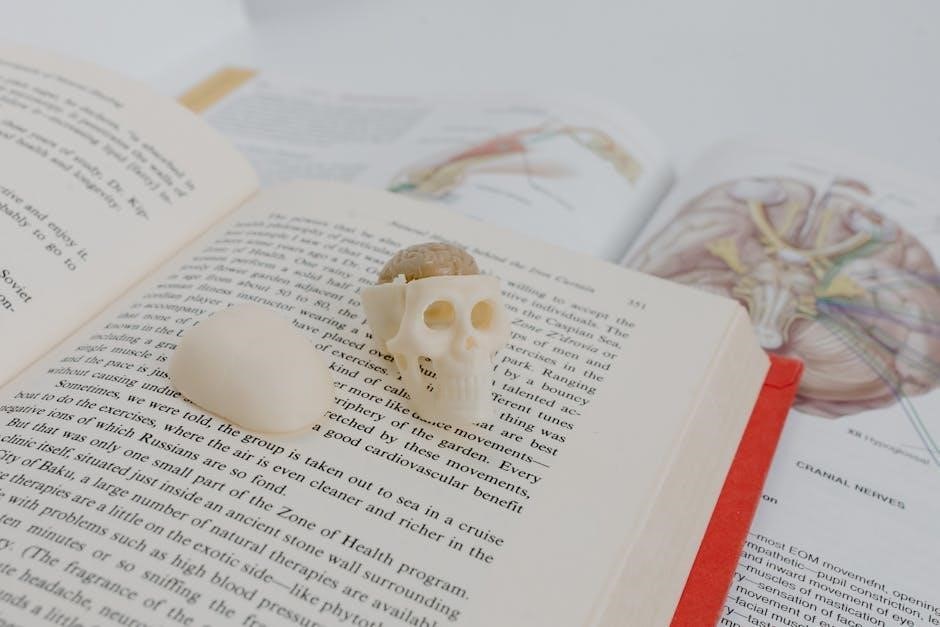
Constructive anatomy is vital in medical and scientific illustration, where precision and accuracy are paramount. Artists use this knowledge to create detailed, anatomically correct visuals for textbooks, surgical guides, and research. By understanding the structure of bones, muscles, and organs, illustrators can depict complex procedures and anatomical details with clarity. This field demands a deep understanding of human anatomy to ensure educational materials are both informative and accurate. Resources like George Bridgman’s and Andrew Loomis’s PDFs often serve as foundational tools for mastering the techniques required in this specialized area of art and science.
The Importance of Practice and Study
Consistent practice and dedicated study are essential for mastering constructive anatomy. Resources like George Bridgman’s and Andrew Loomis’s PDFs provide foundational knowledge for artists to refine their skills.
Developing Observational Skills
Observational skills are crucial in mastering constructive anatomy, as they allow artists to accurately interpret and render the human form. By studying resources like George Bridgman’s and Andrew Loomis’s PDFs, artists can enhance their ability to break down complex anatomical structures into manageable components. Regular sketching and analysis of the human body help refine visual perception, enabling the artist to capture proportions, gestures, and details effectively. These skills are foundational for creating realistic and dynamic representations of the human form, whether in drawing, painting, or sculpture. Consistent practice and study ensure that observational abilities evolve, leading to more precise and expressive artistic outcomes.
Continuous Learning and Improvement
Continuous learning and improvement are essential for mastering constructive anatomy, as the human form is intricate and requires ongoing study. Artists benefit from regularly reviewing resources like George Bridgman’s and Andrew Loomis’s PDFs, which provide detailed insights into anatomical structure and proportion. Engaging in consistent practice, such as sketching and analyzing the body, helps refine skills and deepen understanding. Over time, this dedication leads to greater accuracy and confidence in artistic representations. By embracing lifelong learning, artists can stay updated with new techniques and adapt to evolving artistic demands, ensuring their work remains dynamic and precise. This commitment to growth is vital for achieving mastery in constructive anatomy and related artistic disciplines.
Conclusion
Constructive anatomy is a fundamental tool for artists seeking to master the depiction of the human form. By understanding the underlying structure, proportion, and movement of the body, artists can create more accurate and dynamic representations. Resources like George Bridgman’s and Andrew Loomis’s works, available as PDFs, provide invaluable guidance for both beginners and experienced practitioners. Continuous study and practice are essential for refining skills, as constructive anatomy is both a science and an art. Embracing this discipline not only enhances technical ability but also fosters creativity, allowing artists to bring their visions to life with precision and confidence. Ultimately, constructive anatomy remains a cornerstone of artistic excellence, offering endless opportunities for growth and expression.