
The Red Convertible: A Comprehensive Analysis
Finding a “The Red Convertible Short Story PDF” requires diligent searching online through educational databases, literary websites, and potentially, library resources for accessible versions.
Louise Erdrich, a prolific and highly acclaimed author of Native American descent – specifically Ojibwe – is renowned for her powerful storytelling and exploration of identity, community, and the lasting impacts of historical trauma. Her work frequently centers on the experiences of Native people in the United States, blending cultural specificity with universal themes.
“The Red Convertible,” published in 1974, is a poignant short story that exemplifies Erdrich’s literary style. It’s a narrative deeply rooted in the aftermath of the Vietnam War, focusing on the complex relationship between two brothers, Lyman and Henry Junior Lamartine, and their symbolic connection to a 1968 red convertible. The story’s emotional resonance stems from its exploration of grief, loss, and the struggle to reconcile with a changed world. Accessing a “The Red Convertible Short Story PDF” allows for focused study of Erdrich’s masterful prose and thematic depth.
Historical Context: The Vietnam War’s Impact
“The Red Convertible” is inextricably linked to the historical context of the Vietnam War, a conflict that profoundly impacted American society and, specifically, Native American communities. Many Native Americans served in disproportionately high numbers during the war, often facing systemic discrimination and returning home to further marginalization.
The story doesn’t explicitly depict combat, but the war’s shadow looms large, influencing Henry Junior’s psychological state and contributing to the brothers’ sense of displacement. The availability of a “The Red Convertible Short Story PDF” facilitates a closer examination of how Erdrich subtly weaves the war’s trauma into the narrative fabric. The story reflects the broader societal anxieties and disillusionment prevalent in the post-war era, exploring themes of loss, alienation, and the difficulty of reintegration into civilian life.
The Significance of the Red Convertible Itself
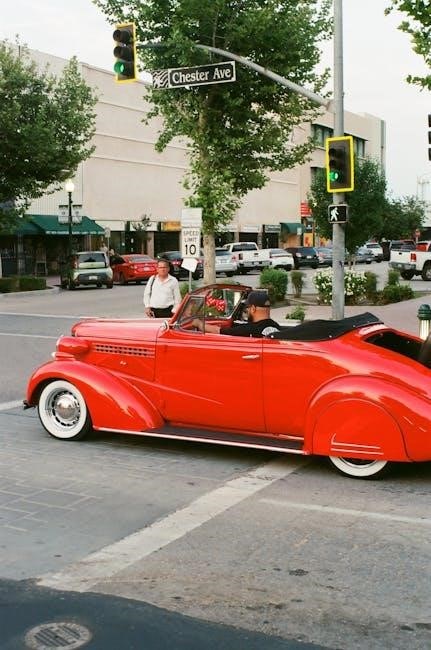
The red convertible transcends its status as mere transportation; it embodies freedom, connection, and the brothers’ shared identity. Purchased with funds from Henry Junior’s wartime savings and Lyman’s work, the car represents a hopeful attempt to reclaim a sense of normalcy and rebuild their lives. Accessing a “The Red Convertible Short Story PDF” allows for detailed analysis of how Erdrich utilizes the car as a potent symbol.
Its vibrant color contrasts with the somber realities of war and loss, initially signifying joy and possibility. However, as the narrative unfolds, the car’s eventual destruction mirrors the fracturing of the brothers’ bond and the irreversible damage inflicted by trauma. The convertible’s journey, and ultimate fate, become central to understanding the story’s thematic concerns.

Character Analysis
Character analysis benefits from accessing a “The Red Convertible Short Story PDF”, enabling close readings of Lyman, Henry, and Marie’s complex motivations and interactions.
Lyman Lamartine: A Deep Dive

Lyman Lamartine, as revealed through a “The Red Convertible Short Story PDF”, emerges as the pragmatic and emotionally restrained narrator, grappling with the aftermath of the Vietnam War and his brother’s altered state. His character is defined by a quiet strength and a deep, unspoken love for Henry Junior.
Accessing the full text allows for a nuanced understanding of Lyman’s internal conflict – his attempts to reconnect with Henry while simultaneously mourning the loss of his former self. He embodies resilience, attempting to navigate grief and responsibility. The PDF facilitates tracing his actions, from the initial purchase of the car to the poignant final scene, revealing a character burdened by loss yet determined to honor his brother’s memory.
Henry Junior Lamartine: Exploring His Transformation
A “The Red Convertible Short Story PDF” provides crucial insight into Henry Junior Lamartine’s devastating transformation following his service in Vietnam. Initially vibrant and full of life, he returns profoundly changed, exhibiting erratic behavior and a detachment from reality. The story, accessible in PDF format, details his struggle to reintegrate into civilian life and reconnect with his brother, Lyman.
The PDF allows readers to meticulously trace the progression of Henry’s decline, observing how the war’s trauma manifests in his actions and silences. His eventual act of driving the car into the river symbolizes a final, desperate attempt to shed the weight of his experiences, a tragic culmination of his internal turmoil.
Marie Lazarre: Her Role and Symbolism
Accessing a “The Red Convertible Short Story PDF” reveals Marie Lazarre’s subtle yet significant role as a symbol of resilience and enduring connection within the narrative. While not central to the plot’s action, Marie represents a grounding force for both Lyman and Henry Junior, embodying a sense of normalcy amidst their shared trauma and loss.
The PDF highlights her quiet strength and unwavering presence, offering a counterpoint to Henry’s unraveling. She serves as a reminder of the life they once knew and the possibility of future healing. Her connection to the community and her ability to maintain a sense of hope underscore the importance of support systems in navigating the aftermath of war.

Themes and Motifs
“The Red Convertible Short Story PDF” reveals core themes of war’s impact, loss of innocence, brotherhood, and grief, powerfully interwoven throughout the narrative.
The Destructive Nature of War
Analyzing a “The Red Convertible Short Story PDF” immediately highlights how the Vietnam War profoundly disrupts the lives of Lyman and Henry Junior. The narrative doesn’t depict battlefield horrors directly, but focuses on the insidious, lingering damage inflicted upon returning soldiers and their communities.
Henry Junior’s altered state after the war—his quietness, impulsive actions, and eventual tragic fate—serves as a stark illustration of post-traumatic stress. The convertible itself, initially a symbol of freedom and connection, becomes entangled with Henry’s unraveling.
The story subtly demonstrates how war dismantles identity and fractures relationships, leaving behind a residue of grief and a sense of irreparable loss. It’s a powerful commentary on the unseen wounds of conflict, accessible through careful study of the text.
Loss of Innocence and Identity
A close reading of a “The Red Convertible Short Story PDF” reveals a poignant exploration of lost innocence, particularly for Henry Junior. Before Vietnam, he’s a vibrant, mischievous character; the war fundamentally alters his spirit, stripping away his youthful exuberance and replacing it with a haunting quietude.
His impulsive purchase of the car, and subsequent destructive acts, can be interpreted as attempts to reclaim a sense of self, a desperate grasping for the identity he’s lost. Lyman witnesses this erosion, struggling to connect with the brother he once knew.
The story powerfully illustrates how trauma can dismantle one’s core identity, leaving behind a fragmented and unrecognizable self. Examining the PDF allows for detailed analysis of these subtle, yet devastating, shifts.
The Power of Connection and Brotherhood
Analyzing a “The Red Convertible Short Story PDF” highlights the profound bond between Lyman and Henry Junior. Their shared experiences, symbolized by the car itself, represent a deep connection forged through childhood and strengthened by mutual support. This brotherhood is tested, and ultimately fractured, by the Vietnam War’s impact on Henry.

Lyman’s unwavering loyalty and attempts to reach his brother demonstrate the enduring power of familial love. He actively tries to restore their connection, even in the face of Henry’s increasing detachment.
The story underscores how strong relationships can offer solace and resilience, yet are not always enough to overcome the devastating consequences of trauma. The PDF facilitates a nuanced understanding of this complex dynamic.
Grief and Mourning Processes
A “The Red Convertible Short Story PDF” reveals Erdrich’s exploration of grief, specifically Lyman’s response to Henry Junior’s death. The narrative doesn’t present a linear mourning process; instead, it’s fragmented and expressed through actions – dismantling the car, the journey west, and ultimately, releasing Henry’s belongings into the water.
Lyman’s grief is characterized by a quiet, internal struggle, lacking overt displays of emotion. His actions are symbolic attempts to sever ties with the past and find a way to honor his brother’s memory.
The story suggests that mourning is a deeply personal and often unconventional journey, and that finding closure can involve letting go of tangible connections to the deceased. The PDF aids in dissecting these subtle expressions of sorrow.

Symbolism in “The Red Convertible”
A “The Red Convertible Short Story PDF” unlocks deeper understanding of symbols like the car, water, and the westward journey, revealing their layered meanings.
The Car as a Symbol of Freedom and Connection
Accessing a “The Red Convertible Short Story PDF” allows for focused analysis of the car’s multifaceted symbolism. Initially, the red convertible embodies freedom for Lyman and Henry Junior, representing their escape from reservation life and a shared adventure westward.

However, it quickly becomes a symbol of their deep connection and brotherhood, forged through the collaborative purchase and subsequent road trip. The car facilitates shared experiences and strengthens their bond.
As the narrative progresses, particularly after Henry Junior’s return from Vietnam, the convertible’s symbolism shifts, reflecting the fracturing of their relationship and the damaging effects of war. The car’s eventual destruction mirrors the loss of innocence and the irreparable damage inflicted upon their lives, making the PDF a crucial tool for understanding this complex symbolism.
Water Imagery and its Meaning
A “The Red Convertible Short Story PDF” facilitates a close reading of Erdrich’s potent water imagery. Water consistently appears as a symbol of purification, grief, and ultimately, acceptance. The repeated references to rivers and lakes, particularly the final scene, are central to understanding the story’s emotional core.
Initially, water represents a potential for renewal and escape, mirroring the characters’ journey. However, as Henry Junior’s trauma intensifies, water becomes associated with sorrow and the overwhelming weight of his experiences.
The act of dismantling the car and scattering its parts into the water signifies a letting go – a painful but necessary step in the mourning process. Analyzing the PDF reveals how Erdrich masterfully uses water to convey themes of loss, healing, and the cyclical nature of life.
The Journey West: A Symbolic Quest
Accessing a “The Red Convertible Short Story PDF” allows for detailed examination of the westward journey as a symbolic quest for identity and healing. The trip, initially fueled by youthful exuberance and the freedom embodied by the red convertible, quickly transforms into a search for meaning after Henry Junior’s return from Vietnam.
The westward movement mirrors a classic American narrative of exploration and self-discovery, but it’s deeply complicated by the shadow of war. The landscape itself becomes a reflection of the characters’ internal states, shifting from hopeful to desolate.
Analyzing the PDF reveals how Erdrich uses the journey to explore themes of displacement, alienation, and the difficulty of reintegrating into civilian life after experiencing trauma.
Narrative Structure and Style
Erdrich’s Use of Storytelling Traditions, evident in a “The Red Convertible Short Story PDF”, employs a fragmented timeline, enhancing emotional impact and realism.
First-Person Narration and its Effects
Analyzing a “The Red Convertible Short Story PDF” reveals the profound impact of Lyman Lamartine’s first-person narration. This perspective intimately connects the reader to his grief and memories surrounding Henry Junior. The narrative’s immediacy fosters a sense of authenticity, drawing us directly into Lyman’s emotional landscape as he recounts their shared experiences and the devastating consequences of the Vietnam War.
Through Lyman’s voice, Erdrich skillfully employs a conversational tone, mirroring the oral storytelling traditions of Native American cultures. This stylistic choice enhances the story’s emotional resonance and allows for a nuanced exploration of themes like brotherhood, loss, and the search for identity. The limited perspective, however, also creates a sense of mystery, prompting readers to interpret events and characters through Lyman’s subjective lens.
Erdrich’s Use of Storytelling Traditions
Examining a “The Red Convertible Short Story PDF” highlights Louise Erdrich’s masterful integration of Native American storytelling traditions. The narrative structure, resembling an oral recounting, eschews a strictly linear timeline, instead weaving together memories and reflections. This fragmented approach mirrors the way stories are often shared and remembered within Indigenous communities – not as a rigid sequence of events, but as interconnected fragments.
Erdrich’s prose is imbued with a lyrical quality and a focus on imagery, characteristic of oral storytelling. The emphasis on relationships, community, and the spiritual connection to the land further reflects these traditions. By employing these techniques, Erdrich not only honors her Ojibwe heritage but also enriches the story’s emotional depth and cultural significance, offering a unique literary experience.
The Fragmented Timeline and its Purpose
Analyzing a “The Red Convertible Short Story PDF” reveals Erdrich’s deliberate use of a non-chronological narrative. The story jumps between past and present, mirroring the way trauma and grief operate in the human psyche. This fragmented structure isn’t a flaw, but a powerful technique to convey Lyman’s emotional state and the lingering impact of Henry Junior’s experiences in Vietnam.
The shifting timeline emphasizes the difficulty of processing loss and the way memories resurface unexpectedly. It also reflects the cyclical nature of grief and the ongoing struggle to reconcile with the past. By presenting events out of order, Erdrich compels the reader to actively participate in reconstructing the story, mirroring Lyman’s own attempts to make sense of his brother’s fate.

Analyzing Key Scenes
A “The Red Convertible Short Story PDF” facilitates close reading of pivotal moments – the car’s purchase, the North Dakota journey, and the final, haunting scene by the water.
The Purchase of the Red Convertible
Accessing a “The Red Convertible Short Story PDF” allows for focused analysis of this crucial scene; The initial acquisition of the car, funded by Lyman and Henry’s combined earnings, symbolizes their shared dreams and burgeoning independence. It’s a tangible representation of their brotherhood and a hopeful escape from reservation life.
The PDF format enables detailed examination of Erdrich’s descriptive language surrounding the convertible – its vibrant color, its promise of freedom, and the sheer joy it brings to the brothers. Studying the text directly reveals how this purchase isn’t merely transactional; it’s an investment in their future, a shared project brimming with optimism before the shadow of war descends. The PDF aids in pinpointing the foreshadowing embedded within this seemingly idyllic moment.
The Journey to North Dakota
Utilizing a “The Red Convertible Short Story PDF” facilitates a close reading of the pivotal road trip. The journey westward, undertaken in their newly acquired red convertible, initially embodies freedom and adventure. However, the PDF allows for tracing the subtle shifts in Henry’s demeanor, foreshadowing his eventual emotional unraveling.
Analyzing the text within the PDF reveals how the landscape itself mirrors Henry’s internal state. The open road, initially a symbol of possibility, gradually becomes a space of increasing tension and unspoken grief. The PDF format enables detailed examination of Lyman’s observations, highlighting his growing concern for his brother. It’s through this focused study that the journey’s symbolic weight – a desperate attempt to reclaim a lost connection – becomes fully apparent.
The Final Scene at the Water’s Edge
Accessing a “The Red Convertible Short Story PDF” is crucial for dissecting the haunting final scene. The act of dismantling the car and casting the pieces into the Red Lake River is profoundly symbolic. A PDF allows for repeated, focused analysis of Lyman’s narration, revealing the depth of his grief and acceptance.
The PDF format facilitates tracing the water imagery, a recurring motif throughout the story, culminating in this act of symbolic release. Studying the text closely reveals how the destruction of the convertible isn’t an act of despair, but a ritualistic letting go – a final attempt to sever ties with the past and honor Henry’s memory. The PDF aids in understanding the complex emotions embedded within this poignant conclusion.

Resources for Further Study
Locating a “The Red Convertible Short Story PDF” is a starting point; explore academic databases and literary websites for insightful criticism and analysis.
Finding a “The Red Convertible Short Story PDF”
Securing a digital copy of Louise Erdrich’s “The Red Convertible” as a PDF often begins with exploring reputable online sources; Many educational institutions and libraries offer access to literary texts through their digital collections. A targeted search using keywords like “The Red Convertible PDF download” can yield results, but caution is advised regarding copyright and website legitimacy.
Furthermore, platforms dedicated to literary analysis and study materials sometimes provide PDFs for classroom use. Websites offering free ebooks should be approached with discernment, ensuring they are legally distributing the content. Remember to prioritize sources that respect authorial rights and intellectual property. Utilizing university library databases, if accessible, is a reliable method for obtaining a verified PDF version of the story for academic purposes.
Academic Articles and Literary Criticism
Delving into scholarly interpretations of “The Red Convertible” enriches understanding beyond the narrative itself. Academic databases like JSTOR, Project MUSE, and Google Scholar host numerous articles analyzing Erdrich’s work, often focusing on themes of war, identity, and Native American experiences. Literary criticism frequently examines the story’s narrative structure, symbolism, and the impact of the Vietnam War on its characters.
These resources provide diverse perspectives, exploring the story’s cultural context and Erdrich’s stylistic choices. Searching for keywords like “The Red Convertible analysis,” “Erdrich Vietnam War,” or “Native American literature Erdrich” will uncover relevant scholarly pieces. Engaging with these critical essays offers a deeper appreciation for the story’s complexities and its enduring literary significance, complementing a PDF reading.
Louise Erdrich’s Other Works
Exploring Louise Erdrich’s broader literary output provides valuable context for understanding “The Red Convertible.” Her prolific career includes novels like “Love Medicine,” “Tracks,” and “The Round House,” often interconnected and set within the same fictional landscape of North Dakota. These works frequently feature recurring characters and explore similar themes of Native American identity, family dynamics, and the lasting effects of historical trauma.
Reading Erdrich’s other stories and novels illuminates her consistent stylistic features and thematic concerns, enriching the interpretation of “The Red Convertible.” Discovering her range as an author deepens appreciation for her unique voice and her commitment to portraying the complexities of Native American life, complementing a PDF study of this particular short story.